
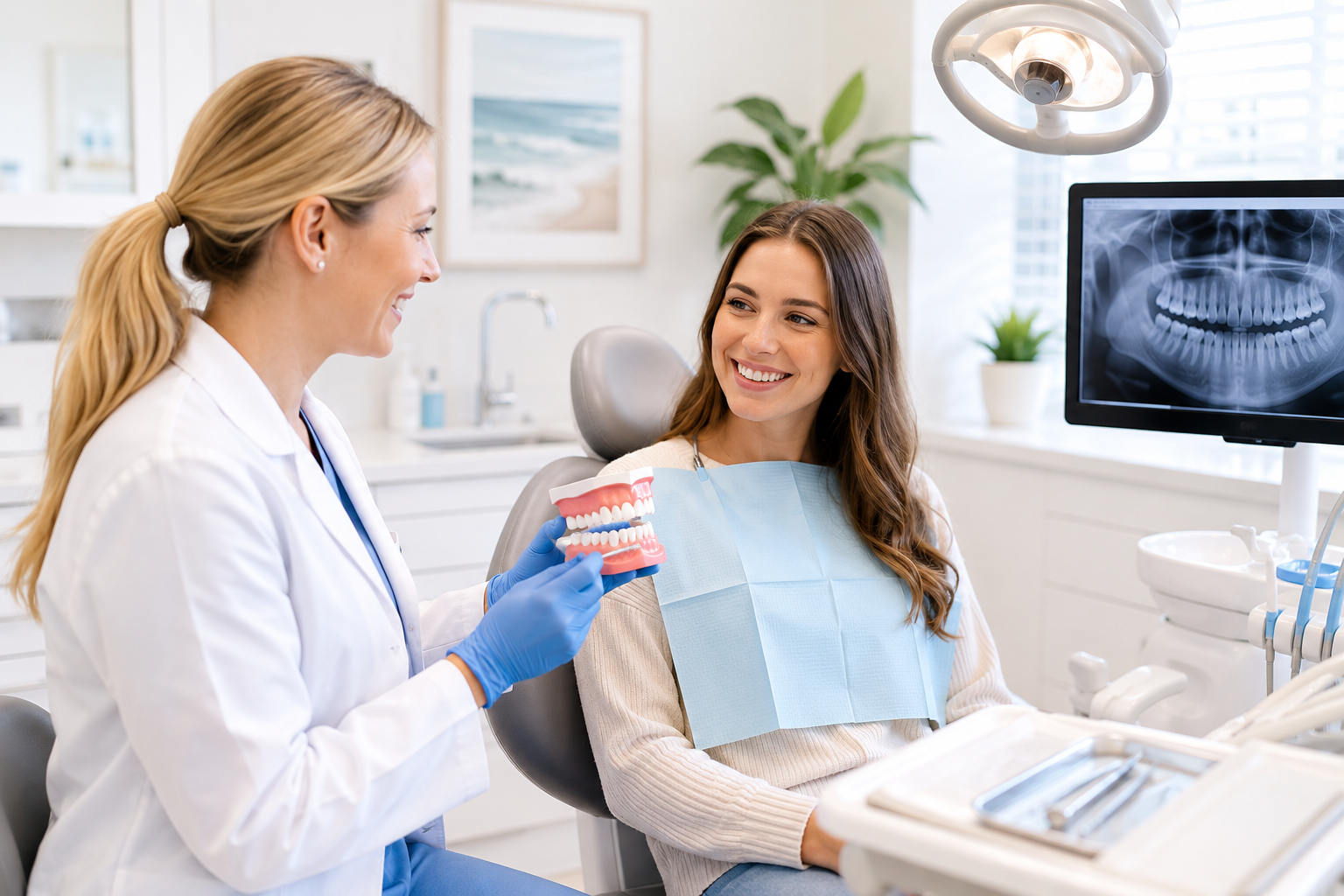
You want a clear, local answer about how much braces for kids in Palmdale, CA will cost and what affects that price. Typical treatment for children in Palmdale commonly ranges from about $3,000 to $7,000 depending on the type of braces, treatment length, and whether phase I (early) care is needed.
They will find explanations of why early orthodontic checks can lower long-term costs, which brace types fit different ages and budgets, and what to expect at the first consultation. The article will also cover insurance, payment plans, and practical ways to reduce out-of-pocket costs so families can plan with confidence.
Why Early Orthodontic Care Matters
Early orthodontic care identifies and addresses bite, spacing, and jaw growth problems before they become harder and more expensive to fix. Timely evaluation guides less invasive treatment, can shorten total treatment time, and improves function and self‑confidence during school years.
Benefits of Timely Treatment
Early treatment often uses growth to the child’s advantage. Interceptive appliances, like expanders or partial braces, can widen a narrow upper jaw or guide erupting adult teeth into better positions. This can reduce or eliminate the need for full braces later.
Treating problems sooner can also shorten overall time in braces. For example, correcting crossbites at age 7–9 often prevents asymmetric jaw growth and simpler orthodontics in adolescence. Parents also see faster improvements in chewing, speech, and dental hygiene when crowding is relieved early.
Financially, staged care can spread costs into smaller, predictable phases. Many Palmdale practices offer sliding or phased payment plans that make early intervention more affordable than delaying into more complex surgery‑level treatment.
Signs Your Child Might Need Braces
Watch for teeth that are visibly crowded, spaced widely, or crossing over one another. Early adult teeth that come in behind baby teeth (shark teeth), persistent thumb‑sucking past age 4, and difficulty chewing or biting are clear indicators to seek an evaluation.
Other signs include chronic mouth breathing, speech issues like a lisp linked to tooth position, and asymmetric jaw lines when the child bites down. Frequent biting of the cheek or tongue and teeth that wear unevenly also signal functional problems.
If any of these appear, schedule an orthodontic check by age 7. A brief exam and digital X‑rays in Palmdale can reveal jaw growth patterns and help parents choose the most economical and comfortable timing for treatment.
Long-Term Impacts on Oral Health
Untreated malocclusion increases the risk of tooth decay and gum disease because crowded or crooked teeth are harder to clean. Misaligned bites can create abnormal wear patterns and stress on teeth, leading to fractures or premature tooth loss decades earlier.
Jaw misalignment can contribute to chronic headaches, TMJ pain, and sleep‑related breathing problems such as snoring or obstructive sleep apnea in severe cases. Early correction reduces these risks by improving jaw function and airway space during growth.
Investing in early orthodontics often prevents future invasive procedures, including extractions or orthognathic surgery. Parents in Palmdale who pursue timely care typically see better long‑term oral health and lower cumulative treatment costs.
Types of Braces Available for Children
Parents often choose among fixed metal brackets, tooth-colored options, and removable aligners based on cost, appearance, and the child’s ability to cooperate with care. Each choice affects treatment time, maintenance, and out-of-pocket expense.
Traditional Metal Braces
Traditional metal braces use stainless steel brackets bonded to teeth and connected by metal wires. They remain the most common choice for children because they handle complex tooth movements reliably and usually cost less than other options.
Orthodontists adjust the archwire every 4–8 weeks to progress alignment. Metal braces work well for severe crowding, bite issues, and growing mouths that need predictable, continuous force.
Maintenance requires daily brushing, interdental cleaning, and avoiding hard or sticky foods to prevent broken brackets. Many clinics offer colorful elastics for kids who want a personalized look.
Ceramic and Clear Braces
Ceramic braces use tooth-colored or clear brackets with metal or tooth-colored wires to reduce visibility. They provide similar control to metal braces for most movements, but ceramic brackets can be larger and more brittle.
Ceramic options typically cost more than metal due to materials and lab work. They may stain if elastic ties are not changed regularly; using clear or tooth-colored wires and elasticless systems can reduce staining risk.
Orthodontists may recommend ceramic braces for image-conscious teens when biomechanics remain straightforward. They still require careful oral hygiene and similar adjustment schedules to metal systems.
Invisalign and Removable Options
Invisalign and other clear aligners use a series of removable, transparent trays custom-made from digital scans. They work well for mild to moderate crowding and spacing, and they allow normal eating and easier brushing since trays come out.
Treatment success depends on wear time—children must wear aligners 20–22 hours daily. Compliance can be challenging for younger kids, so clinicians often reserve aligners for responsible teens.
Cost varies: aligners often run higher than traditional metal braces. Digital monitoring and fewer in-office wire adjustments can offset some visits, and many offices offer financing or flexible payment plans.
Understanding What Influences Pricing
Parents should expect cost differences based on how complex the correction is, how long treatment lasts, and which materials or custom options they choose. These three factors explain most of the variation in quotes for children’s braces in Palmdale.
Complexity of Dental Issues
The severity and type of malocclusion drive the baseline price. Simple spacing or mild crowding typically requires fewer clinic visits and shorter chair time, so traditional metal braces can cost less. Conversely, cases with impacted teeth, severe crowding, crossbites, or jaw alignment issues often need extra procedures like extractions, temporary anchorage devices (TADs), or surgical consultations, which increase total fees.
Orthodontic records contribute to cost too: panoramic X-rays, cephalometric films, and digital scans add diagnostic charges. Frequent adjustments and additional appliances (palatal expanders, habit appliances) also raise the bill because they require more materials and clinician time. Insurance and public programs may cover parts of medically necessary treatments; documented severity can affect coverage approval.
Treatment Duration
Longer treatments raise costs through more adjustment visits, longer appliance wear, and increased likelihood of repairs or replacements. Typical pediatric orthodontic courses range from 12 to 36 months; shorter treatments fall near the lower end of fee schedules, while multi-phase plans (early interceptive work plus later comprehensive care) effectively double active treatment time and cost.
Time-related cost drivers include monthly or biweekly appointment frequency, retainer fabrication at the end of active treatment, and potential relapse management. Busy appointment schedules or treatment interruptions (missed visits, poor compliance) can extend duration and raise cumulative costs. Many offices offer payment plans tied to anticipated treatment length, so a longer plan usually means higher monthly payments or extended financing periods.
Materials and Custom Options
Bracket type and wire systems show clear price differences. Traditional stainless-steel brackets remain the most cost-effective. Ceramic or clear brackets increase aesthetic appeal but raise fees by 10–40% depending on brand and bonding complexity. Self-ligating systems or low-friction brackets sometimes cost more up front and may affect adjustment frequency.
Clear aligner therapy for children (when appropriate) typically costs more than metal braces because of lab fees for multiple trays and digital setup. Customization options—digital treatment planning, 3D-printed appliances, invisible retainers, and personalized color or coating choices—add line-item charges. Warranty for broken brackets, emergency visits, and replacement retainers may be sold separately or included; reviewing the treatment contract clarifies which material costs are bundled and which are extra.
Average Braces Costs in Palmdale, CA
Costs vary by appliance type, treatment length, and the provider’s experience. Many families in Palmdale can expect a range from affordable options to higher-end care depending on those factors.
Typical Price Ranges
Metal braces (traditional stainless steel) for children in Palmdale commonly run between $3,000 and $6,000 for a full course of treatment. Ceramic braces, which are less noticeable, typically cost $4,000 to $7,000 because materials and lab work are pricier.
Clear aligner systems designed for teens often fall in the $3,500 to $7,500 range, depending on case complexity and whether local appointments are required.
Initial consultation and X-rays usually add $100–$300 if not included. Retainers after active treatment commonly cost $100–$500 more. Many practices split total fees into monthly payments; typical monthly plans are $100–$300 depending on down payment and term length.
Comparing Local Providers
Orthodontists in Palmdale with more years of pediatric focus or residency training may charge toward the higher end of the ranges. General dentists offering limited orthodontic services sometimes quote lower prices, but complex cases usually require an orthodontist.
Ask each office for an itemized estimate showing diagnostics, appliance fees, adjustment visits, and retainers. Confirm whether X-rays, emergency visits, and removal are included.
Check recent patient reviews and before/after photos to compare outcomes, not just price. Inquire about financing, in-house payment plans, and partnerships with third-party lenders to find the best balance of cost and quality.
Differences in Fee Structures
Two common fee models appear in Palmdale: single global fee and pay-as-you-go. A global fee covers all active treatment visits and appliances for one price, offering predictable budgeting. Pay-as-you-go charges per visit or per phase and can look cheaper initially but may end up higher for longer treatments.
Some offices require a down payment (often $500–$1,500) with the remainder split into monthly installments. Others offer 0% interest financing for 12–24 months, which lowers the monthly burden.
Insurance coverage varies: dental insurance may cover $1,000–$2,000 toward orthodontics for dependent children. Verify lifetime maximums and pre-authorization requirements. Always request a written fee agreement that details what triggers extra charges, such as broken brackets or missed appointments.
Insurance and Payment Options
Families find several ways to lower out-of-pocket costs for children’s braces in Palmdale, including dental insurance coverage, monthly payment plans from orthodontic offices, and tax-advantaged accounts like HSAs and FSAs. Each option has rules about eligibility, covered services, and timing that affect final cost.
How Dental Insurance Can Help
Dental insurance often covers part of orthodontic treatment for children, but specifics vary by policy. Many employer plans provide a lifetime orthodontic benefit with a fixed maximum (commonly $1,000–$2,000) and percentage coverage (typically 25%–50%). Insurers may limit coverage by age, requiring treatment to begin before a certain birthday to qualify.
Policies usually apply waiting periods—commonly 6–12 months—before orthodontic benefits kick in. Patients should verify whether the plan reimburses as treatment progresses or only after completion. In-network orthodontists may bill the insurer directly, reducing upfront costs.
Parents should request a pre-treatment estimate from the orthodontist and submit it to the insurer. That estimate clarifies expected insurer payments, patient responsibility, and whether retainers or adjustments are covered. Knowing these details prevents surprise bills and helps compare providers.
Flexible Payment Plans
Orthodontic offices in Palmdale commonly offer in-house financing to spread costs over the course of treatment. Typical plans divide the total after-insurance balance into monthly payments that match the treatment term, often with no interest if paid on time. Initial down payments range from $0 to 20% of the balance.
Third-party lenders also provide patient financing with fixed or promotional interest rates. These may require a credit check and can offer longer terms; however, interest increases total cost. Families should compare APR, total paid, and early-payoff penalties.
Ask about payment plan details in writing: monthly amount, number of payments, interest rate, late fees, and what happens if treatment extends. Confirm whether emergency visits, adjustments, or retainer fees are included or billed separately.
Health Savings Accounts
Health Savings Accounts (HSAs) and Flexible Spending Accounts (FSAs) let families pay orthodontic costs with pre-tax dollars, reducing net expense. Orthodontic treatment for a diagnosed dental condition typically qualifies as an eligible medical expense; parents should keep invoices and orthodontist statements for documentation.
FSAs operate on a use-it-or-lose-it basis tied to the plan year, so plan contributions to match anticipated orthodontic payments. HSAs roll over year to year and can be paired with high-deductible health plans; they offer long-term tax advantages and can cover braces, retainers, and related orthodontic care.
Before using HSAs/FSAs, confirm eligibility with plan administrators and save the orthodontic treatment plan, receipts, and insurer statements. These records support claims and simplify IRS documentation if requested.
Ways to Save on Children’s Braces
Families can lower orthodontic costs by timing treatment, using in-office discounts or membership plans, and seeking care at community clinics or dental schools. Practical options include seasonal specials, multi-child discounts, sliding-scale clinics, and flexible financing that keeps monthly payments affordable.
Seasonal Promotions
Orthodontic offices often run limited-time offers tied to the calendar: back-to-school specials in July–August, holiday discounts in December, and spring promotions in March–May. These typically reduce initial exam fees, lower down payments, or offer a percentage off total treatment when signing within the promotional window.
Parents should ask specific questions: exact discount amount, which services it covers (brackets, retainers, X-rays), whether promotions stack with insurance, and the promotion’s expiration date. Clinics usually require enrollment during the promo period; verify what portion of the fee is due up front and whether payments pause during school breaks. Keep documentation of the offer in writing to avoid misunderstandings.
Orthodontic Discount Programs
Many practices offer in-house membership plans, family discounts, and third-party financing tailored to braces. In-house plans may charge a monthly membership fee and provide reduced exam and treatment rates for enrolled family members. Family discounts often reduce the second child’s fee by a set percentage.
Compare financing options by APR, total interest, and any origination fees. Look for 0% interest plans or low-interest promotional periods. Read contracts for late-payment penalties and whether missed payments affect appliance replacement coverage. Ask about cash-pay discounts and bundled pricing for braces plus retainers to find the most cost-effective combination.
Community Health Clinics
Community health centers, dental schools, and nonprofit clinics in Palmdale and nearby Antelope Valley provide lower-cost orthodontic care or referral programs. Dental schools may offer treatment by supervised residents at significant savings; wait times can be longer but clinical oversight remains strong.
Check eligibility rules and sliding-scale fees; some clinics base costs on household income and family size. Confirm which services are included—diagnostic imaging, lab fees, and retainers may carry extra charges. Call multiple clinics for current waitlists, financial aid options, and documentation required for income verification.
What to Expect at Your First Consultation
The visit starts with a focused exam, diagnostic imaging, and a clear discussion about treatment goals, timing, and cost. Parents will leave knowing the recommended approach, estimated timeline, and payment options for their child’s braces in Palmdale.
Initial Evaluation Process
The orthodontist reviews the child’s dental and medical history and asks about breathing, thumb-sucking, and prior dental work. A clinical exam checks bite, tooth alignment, jaw symmetry, and eruption patterns.
Digital X-rays and intraoral photos are taken to map tooth roots, jaw position, and any impacted teeth. Some offices use a 3D scan (CBCT) when complex skeletal issues are suspected; otherwise panoramic and cephalometric X-rays suffice.
The team may take digital impressions or a quick intraoral scan to create models for treatment planning. Typical first-visit time is 45–60 minutes; bring insurance cards and a list of questions.
Discussing Personalized Treatment Plans
The orthodontist explains whether fixed braces, clear ceramic brackets, or clear aligners fit the child’s needs. They discuss the timing—early interceptive treatment for ages 7–10 versus full-phase treatment typically starting around 11–14.
Treatment length estimates depend on the severity: minor crowding often needs 12–18 months, moderate cases 18–24 months, and complex jaw discrepancies can exceed 24 months. The provider outlines expected appointments—adjustments every 4–8 weeks for braces or aligner checks every 6–10 weeks.
They describe comfort measures: low-profile brackets, topical anesthetic for band placement, and emergency contact procedures for broken wires. Parents receive written treatment goals and a projected timeline to review at home.
Estimating Your Child’s Total Cost
The office provides a written estimate that breaks down fees: diagnostic records, appliance placement, monthly adjustment fees, and retention (retainers). Example: placement $1,500–$2,500, monthly visits $80–$150, and retainers $150–$400 each.
Insurance coverage varies; the front desk runs benefits during the visit and shows expected out-of-pocket costs. Typical insurance covers 30–50% for children’s orthodontics, but lifetime maximums and waiting periods often apply.
Payment options usually include in-house financing, third-party plans, and discounts for full upfront payment. Parents should ask about additional charges for emergencies, broken appliances, or extended treatment beyond the original estimate.
Aftercare and Maintenance Considerations
Proper care keeps treatment on schedule and protects the investment parents make in their child’s smile. Regular checkups, careful cleaning, and sensible eating habits reduce extra costs and shorten treatment time.
Routine Visits and Adjustments
Orthodontic appointments in Palmdale typically occur every 4–8 weeks for braces. During these visits, the orthodontist tightens wires, replaces elastics, and monitors tooth movement using X-rays or photos as needed. Each visit usually takes 15–30 minutes; longer visits may occur for appliance repairs.
Insurance and payment plans sometimes cover routine checks but not emergency repairs, so parents should confirm coverage before treatment begins. Missed or delayed visits can extend treatment by months, adding to total cost. Keep a calendar reminder and contact the office promptly for rescheduling.
Emergency visits for broken brackets, snapped wires, or severe discomfort can incur additional fees. Ask the office about same-day fixes and after-hours support to avoid higher urgent-care charges.
Caring for Braces at Home
Daily cleaning prevents decay around brackets. Brush after every meal with a soft-bristled brush at a 45° angle, spending two minutes total, and use interdental brushes or floss threaders once per day to remove food from between wires and teeth. A fluoride mouthwash at night helps strengthen enamel.
Dietary choices reduce breakages: avoid hard foods like nuts and bagels, sticky candies like caramels, and biting into whole apples or corn on the cob. Cut foods into small pieces and encourage children to chew slowly.
Maintain comfort with orthodontic wax for poking wires and over-the-counter pain relievers for initial soreness. Keep a small supplies kit at home and in the child’s backpack: wax, a travel toothbrush, floss threaders, and a silicone lip protector can prevent many common issues.
Supporting Your Child Through Treatment
Parents can make braces feel like a team effort rather than a medical chore. They should explain the purpose in simple terms — straighter teeth, easier cleaning, and a healthier bite — so the child understands the benefit.
Prepare for short-term discomfort with practical tools. A small kit with orthodontic wax, soft-bristled toothbrush, fluoride toothpaste, and over-the-counter pain reliever helps manage soreness after adjustments.
Celebrate daily wins and progress to keep motivation high. Use a chart or app to track brushing, flossing, and elastic wear; small rewards after milestones reinforce good habits without pressure.
Teach gentle oral-care techniques and model them at home. Parents can demonstrate brushing angles and flossing methods, then supervise until the child shows consistent skill and independence.
Expect dietary changes and offer friendly alternatives. Cut hard or sticky foods into smaller pieces, swap chewy candies for softer snacks, and prepare braces-safe recipes that kids enjoy.
Stay on schedule with appointments and follow the orthodontist’s instructions precisely. Timely adjustments and consistent elastic use often shorten treatment and improve outcomes.
Address emotional concerns with empathy and openness. Reassure children that many peers get braces and that appearance changes are temporary; share photos of progress when appropriate.
Encourage questions and set up a consultation if worries arise. The orthodontic team can explain timelines, pain management, and insurance or payment options to ease financial and emotional strain.
Next Steps Toward a Healthier Smile
They should schedule an initial consultation with a Palmdale orthodontist to review bite, growth patterns, and treatment timing. A short exam and X-rays clarify whether traditional braces, clear aligners, or early interceptive treatment fits best.
Parents can gather insurance and payment information beforehand to streamline the visit. Many practices offer flexible payment plans, in-house financing, or third-party lenders to spread costs over time.
Prepare a list of questions about expected duration, appliance care, and follow-up visits. Knowing how often adjustments occur and what foods to avoid helps families plan school and activity schedules.
The office will provide an estimate that breaks down costs: exam, X-rays, appliance fees, adjustments, and retainers. Here’s a simple example:
| Item | Typical Cost Range (Palmdale) |
|---|---|
| Initial exam & X‑rays | $100–$300 |
| Traditional braces (per arch) | $2,000–$4,500 |
| Clear aligner therapy | $3,000–$6,000 |
| Retainers | $150–$500 |
They should ask about warranties, emergency visits, and what’s included in quoted fees. Clarifying these details avoids surprises and helps compare practices more accurately.
If financial assistance is needed, inquire about sliding-scale clinics or community health programs in Palmdale. Many offices also accept HSAs/Flex spending accounts for orthodontic payments.
Encourage scheduling the appointment soon if a child shows crowding, early loss of baby teeth, or bite problems. A timely evaluation often means simpler, shorter treatment and a more comfortable experience for the child.
Frequently Asked Questions
Most families want clear numbers, typical ranges, and practical ways to make treatment affordable. The answers below cover average costs in California, differences between appliance types, insurance and financing options, timing for evaluations, and ways to find quality local care in Palmdale.
How much do braces typically cost for a child in California, and what factors can change the price?
In California, full traditional braces for children commonly range from $3,500 to $7,000. Severity of the bite problem, length of treatment, location of the practice, and whether additional procedures (extractions, palatal expanders, retainers) are needed push costs higher or lower.
Orthodontist experience and office overhead in areas like Palmdale can raise fees slightly compared with rural clinics. Lab fees, follow-up visits, and emergency care policies also affect the final total.
What’s the difference in cost between traditional metal braces and clear braces for kids?
Traditional metal braces usually sit at the lower end of the cost range, often $3,500–$6,000. Clear ceramic braces typically cost 10–30% more, so parents might expect $4,000–$8,000 depending on case complexity.
Clear aligners for kids (when appropriate) can be comparable to ceramic braces or higher, depending on brand and monitoring frequency. The orthodontist’s recommendation should weigh aesthetics, durability, and the child’s cooperation.
Do orthodontists in Palmdale offer payment plans or monthly financing for children’s braces?
Many Palmdale orthodontic offices offer in-house payment plans with low or zero interest, spreading costs over 12–36 months. Third-party medical/dental lenders like CareCredit also provide monthly financing options with promotional interest rates.
Parents should ask for a written payment schedule, any required down payment, and fees for missed payments. Offices often tailor plans to fit family budgets, especially for full-family treatment plans.
Does dental insurance usually help cover braces for kids, and how can I check my benefits?
Some dental insurance plans provide partial orthodontic benefits for children, commonly covering 25–50% of braces up to a lifetime maximum (often $1,000–$2,000). Coverage depends on the specific plan, age limits, and whether treatment is deemed medically necessary.
Call the insurer with the orthodontist’s treatment code and estimate to confirm coverage, deductibles, and patient responsibility. The orthodontic office can often submit preauthorization requests to clarify benefits before treatment begins.
At what age should my child see an orthodontist for an evaluation, and does early treatment affect total cost?
The American Association of Orthodontists recommends an initial orthodontic evaluation by age 7. Early screening helps detect growth issues that may be simpler and less costly to correct if treated early.
Phase I (interceptive) treatment can add short-term costs but sometimes prevents more extensive, expensive care later. The orthodontist will explain whether early treatment shortens or lengthens total treatment time and how that impacts cost.
How can I find an affordable, well-reviewed orthodontist near Palmdale without sacrificing quality of care?
Search local listings for “orthodontist Palmdale,” then filter by patient reviews, before-and-after photos, and verified credentials (DDS/DMD with orthodontic specialty). Call two or three offices to compare consultation fees, treatment estimates, and payment plans.
Look for offices offering free or low-cost initial consultations and clear written estimates. Asking neighbors, pediatric dentists, or local parenting groups for referrals helps find providers who balance cost with proven patient comfort and outcomes.